
WELCOME BONUS 300%
UP TO €2000 + 100
FREE SPINS
UP TO €2000 + 100
FREE SPINS
Home → Blackjack
Blackjack at Palace Of Chance Casino: Variants, Rules and Payouts
Which table limits suit 20 EUR balance?
Live dealer tables at Palace of Chance offer varied bet ranges, with some blackjack variants accepting wagers from 1 EUR. For instance, Lightning Blackjack by Evolution allows stakes starting at 1 EUR and going up to 2,500 EUR. This broad spectrum ensures players with a 20 EUR balance can participate without immediate risk of exceeding table minimums, allowing for multiple hands. Players should note that even a 1 EUR bet contributes to game turnover.
Infinite Blackjack, also from Evolution, presents a similar betting range, from 1 EUR to 5,000 EUR, and accommodates an unlimited number of players. This accessibility is key for budget-conscious players, as a 20 EUR balance can sustain participation for a reasonable duration. The inclusion of side bets like Any Pair or 21+3 means players have options beyond the main hand, though these also draw from the same balance.
Quantum Blackjack Plus Live, provided by Playtech, features higher stakes, with bets ranging from 1 EUR to 5,000 EUR. While this table is also accessible with a 1 EUR minimum, the potential for rapid depletion of a 20 EUR balance exists if larger bets are placed. The RTP for this game is 99.57% with optimal strategy, making it attractive, but requiring careful stake management.
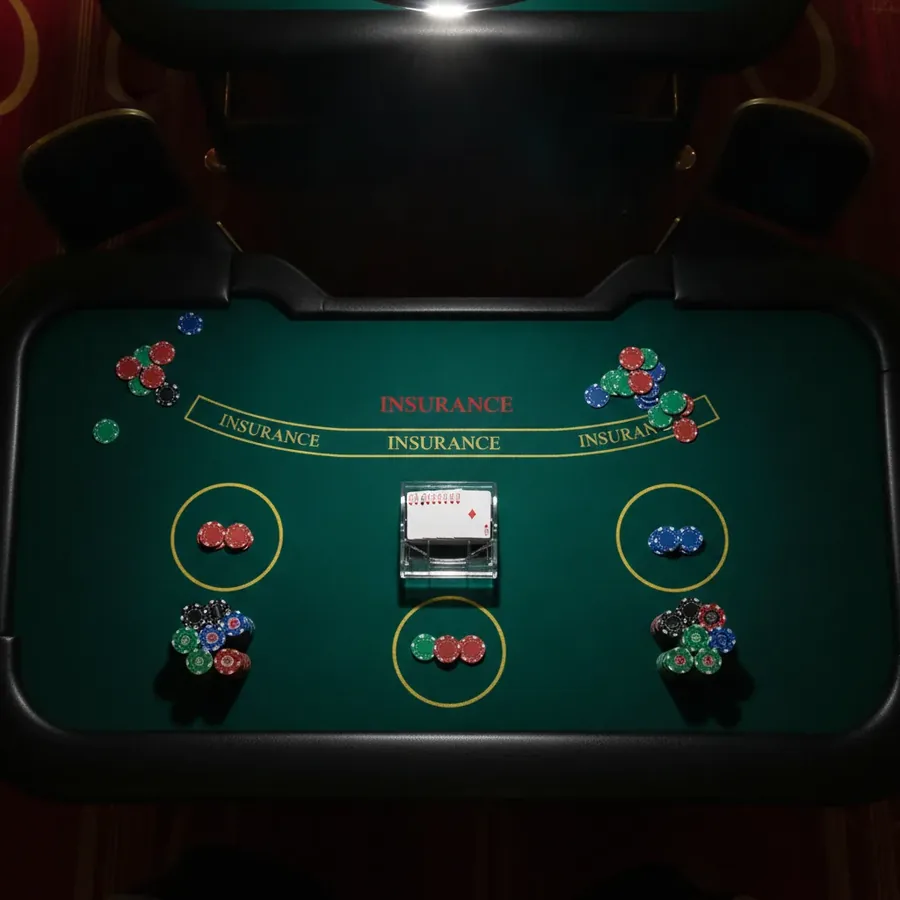
Ace Split: only one card per hand
When splitting Aces in certain blackjack variants at Palace of Chance, the rule dictates that only one additional card is dealt per hand. This is a standard modification in many blackjack games, affecting player strategy significantly. For example, in a game with a 3:2 payout and a house edge of 0.15% (as seen in a single deck variant), this rule is crucial.
This specific Ace split rule means players cannot draw further cards to a split Ace, limiting potential improvements to the hand. While a game like Blackjack Liberal Vegas Strip, with an RTP of 99.72%, might allow for resplitting Aces, the one-card rule per split Ace still applies. This constraint reduces the player's options for improving split hands.
The consequence for a player with a 20 EUR balance is that hands resulting from an Ace split will have a fixed composition, typically consisting of the Ace and one other card. This rule can be contrasted with games where further splits or hits are permitted after splitting, impacting the overall RTP and house edge depending on the specific variant.
Six Decks to Eight Decks in the Shoe
Many blackjack games available at Palace of Chance utilize between six and eight decks in the shoe. A notable example is the Blackjack 6 Decks variant, which offers an RTP of 99.54% with a house advantage of 0.46%. This setup is common and balances the pace of play with the mathematical probabilities inherent in the game. The number of decks directly influences the house edge.
A specific rule modification, such as the payout for blackjack being 6:5 instead of 3:2, can significantly increase the house advantage. When using 6 decks, this 6:5 payout leads to an RTP of 98.15% and a house advantage of 1.85%. This is a substantial increase compared to the standard 3:2 payout and highlights the importance of understanding payout rules.
The number of decks also impacts the effectiveness of basic strategy and card counting. For instance, while insurance is a side bet with a high house advantage (7.47% for 6-8 decks), its strategic advantage diminishes with more decks. A player with a 20 EUR balance needs to be aware that games with more decks might offer less favorable odds over time if not playing optimal strategy.
Ignored Basic Strategy Chart: 1 Percent Wasted
Failing to adhere to basic strategy in blackjack, as outlined by charts for specific game rules, can lead to a significant increase in the house edge. For a game like Blackjack 6 Decks with a 3:2 payout, a house advantage of 0.46% is achievable with optimal play. Deviating from this strategy can easily add 1% or more to the house's advantage.
Consider a variant like Blackjack Auszahlung 6:5 statt 3:2 with 6 decks. Here, the house advantage is already 1.85%. If a player ignores basic strategy, this figure can climb even higher, potentially exceeding 2.85% for that hand. This directly impacts the theoretical RTP, reducing it from 98.15% and making play less favorable for a player with a 20 EUR balance.
The consequence of ignoring basic strategy on a 20 EUR balance is a more rapid depletion of funds. For example, if a player consistently makes suboptimal decisions, they might effectively be surrendering an additional 1% of their wagers to the casino. This is a considerable figure when considering the total amount wagered over many hands, directly impacting long-term playability.
Blackjack Contributes Only 10 Percent to Wagering
For players utilizing the 300% welcome bonus up to €2,000 plus 100 free spins, it is crucial to understand the wagering contribution of different game types. Blackjack games at Palace of Chance contribute only 10% towards meeting these wagering requirements. This means that for every 10 EUR wagered on blackjack, only 1 EUR counts towards the total turnover needed to release bonus funds.
This 10% contribution rate significantly extends the time and amount required to clear bonus funds. If a player aims to clear a bonus requiring 4,000 EUR in turnover (e.g., a 100 EUR bonus with 40x wagering), they would need to wager 40,000 EUR on blackjack (4,000 EUR / 10% = 40,000 EUR). This contrasts sharply with slots, which contribute 100%.
A player with a 20 EUR balance needs to be strategic about bonus play. Given the low contribution of blackjack, focusing solely on this game to meet wagering requirements would be highly inefficient. For example, to contribute 1 EUR to wagering, one must bet 10 EUR on blackjack. This makes clearing the bonus with a limited balance and low contribution games challenging.
Blackjack variants at a glance
| Variant | Payout | House edge | Rule | Bet range |
|---|---|---|---|---|
| Blackjack Ein Deck, klassische Regeln, 3:2 | 99.85% | 0.15% | Weniger Decks = niedrigerer Vorteil; ein Deck gibt ca. −0.48 Prozentpunkte gegenüber 8 Decks. Oft durch 6:5 Auszahlung kompensiert. | Blackjack 3:2, Gewinn 1:1 |
| Blackjack Surrender (Late Surrender) – Regel-Effekt | n.a. (Regel-Modifikator) | −0.08 Prozentpunkte | Spieler gibt Hand nach Dealer-Blackjack-Prüfung auf, verliert die Hälfte des Einsatzes. Verbessert RTP um ca. 0.08 Prozentpunkte. Early Surrender ist wesentlich wertvoller (bis −0.6 Prozentpunkte), aber extrem selten. | Rückzahlung 50% des Einsatzes |
| Blackjack Liberal Vegas Strip (liberale Regeln, 3:2) | 99.72% | 0.28% | Günstigste Regelkombination: S17 + DAS + Resplit + Late Surrender. Standardabweichung 1,15 | Blackjack 3:2, Gewinn 1:1 |
| Blackjack Insurance / Versicherung (6–8 Decks) | 92.53% | 7.47% | Separate Nebenwette bis 50% der Hauptwette, wenn der Dealer ein Ass hat. Basisstrategie schreibt IMMER Ablehnung vor (außer Karten zählen bei True Count ≥ +3). Bei einem Deck Vorteil ≈ 5.88% | Insurance 2:1 |
| Blackjack 6 Decks, S17, DAS, DOA, Auszahlung 3:2, Basisstrategie | 99.54% | 0.46% | Dealer steht auf Soft 17; Verdopplung auf jeder Zweierkarte; Verdopplung nach Split erlaubt; keine Aufgabe. Basisstrategie ist für diesen Wert zwingend | Blackjack 3:2, normaler Gewinn 1:1, Insurance 2:1 |
| Blackjack Split / Double / H17 – Regel-Effekte | n.a. (Regel-Modifikatoren) | H17 +0.22 Prozentpunkte; RSA −0.08 Prozentpunkte; DAS −0.14 Prozentpunkte | Dealer Hits Soft 17 verschlechtert RTP um 0.22 Prozentpunkte; Resplit Aces verbessert um 0.08 Prozentpunkte; Double After Split verbessert um ca. 0.14 Prozentpunkte; 6 Decks statt 8 – ca. 0.02 Prozentpunkte. | Double – Einsatz ×2 mit einer Karte; Split – bis 4 Hände; Ass-Split meist mit einer Karte. |
Split, Double Down, and Surrender in Numbers
Blackjack Split/Double/H17 rules offer several modifiers. Resplitting Aces improves RTP by 0.08 percentage points, while Double After Split enhances it by approximately 0.14 percentage points. Playing with 6 decks instead of 8 reduces the house edge by about 0.02 percentage points, demonstrating subtle but measurable impacts on player returns.
Blackjack Liberal Vegas Strip boasts a Return to Player (RTP) of 99.72%, translating to a house edge of just 0.28%. This favourable outcome is attributed to a combination of rules including Standing on Soft 17 (S17), Double After Split (DAS), and Resplit capabilities. Such a configuration, when played with a base strategy, significantly benefits the player.
The Late Surrender option allows a player to forfeit half their bet after the dealer checks for Blackjack, improving the RTP by approximately 0.08 percentage points. While less impactful than Early Surrender (up to -0.6%), it offers a strategic retreat. The payout for a surrendered hand is 50% of the original stake.
What doesn't count as Blackjack after Split?
In Blackjack Split/Double/H17 variants, splitting Aces is often limited to receiving only one additional card per Ace. While splitting allows for up to four hands, the immediate restriction on subsequent hits after an Ace split means a potential Blackjack on that split hand might not be treated as a natural Blackjack.
Certain rule sets define a Blackjack exclusively as a two-card hand totalling 21. For instance, in Blackjack Split/Double/H17, if a player splits Aces and receives a 10-value card on one of them, resulting in a 21, it may be considered a 21 and not a Blackjack for payout purposes, depending on the specific table rules.
The optimal strategy and payout structure are crucial when evaluating hands formed after a split. For example, a Blackjack Liberal Vegas Strip game offers a 3:2 payout for a natural Blackjack, but the handling of 21s formed through splitting can vary. It is essential to understand these nuances to maximize potential winnings.
RNG draws cards from virtual eight-deck shoe
The fundamental operation of many online Blackjack variants relies on a Random Number Generator (RNG) simulating an eight-deck shoe. This ensures a random distribution of cards for each hand, mimicking the unpredictability of a live game. The use of multiple decks, such as eight, influences the overall house edge and game dynamics.
In standard Blackjack scenarios, like the Blackjack 6 Decks, S17, DAS, DOA variant, an eight-deck shoe is common. This configuration, combined with rules like Standing on Soft 17 (S17) and allowing Double After Split (DAS), contributes to a house edge of 0.46% when played with a base strategy. The number of decks is a key factor in RTP calculations.
The theoretical RTP for Blackjack Insurance, when played with 6-8 decks, is 92.53%, indicating a substantial house advantage of 7.47%. This side bet, placed when the dealer shows an Ace, is generally advised against by basic strategy, as it significantly erodes player returns over the long term, unlike strategic plays involving the main hand.
Splitting Eights vs Standing on 16
A common strategic decision in Blackjack involves splitting a pair of Eights. In Blackjack Split/Double/H17 scenarios, splitting Eights is generally recommended as it transforms a weak starting hand (total of 16) into two potentially stronger hands. This move aims to improve the player's chances against the dealer's upcard.
Standing on a total of 16, particularly when the dealer shows a high card, is a critical juncture. In a Blackjack 6 Decks, S17, DAS, DOA game with a base strategy, a player facing a 16 against a dealer's 7 or higher is often advised to stand. This contrasts with the proactive approach of splitting Eights.
The RTP for Blackjack Liberal Vegas Strip is 99.72%, a figure achieved through optimal play and favourable rules. This high RTP underscores the importance of strategic decisions like splitting Eights versus standing on 16. Deviating from base strategy can significantly increase the house edge, impacting the long-term profitability of the game.
Insurance Pays 2:1 Yet Still Costs Money
Blackjack Insurance is a side bet offered when the dealer's upcard is an Ace, with payouts at 2:1. While this payout seems attractive, the Blackjack Insurance bet (6-8 Decks) carries a substantial house advantage of 7.47%, with an RTP of only 92.53%. This indicates it is a financially disadvantageous bet in the long run for most players.
The decision to take insurance is often based on perceived risk, but mathematically, it is a losing proposition for the vast majority of hands. For instance, the Blackjack Insurance bet's high house edge means that over many sessions, the total amount wagered on insurance will likely exceed the total winnings from it, reducing overall profitability.
A key exception to avoiding insurance is in card-counting scenarios where the true count is significantly positive (e.g., +3 or higher). However, for players not employing advanced techniques, the Blackjack Insurance bet should be avoided. Even with a payout of 2:1, the inherent odds make it a costly wager, effectively lowering the player's expected return.
Bonus conditions often exclude Blackjack completely
Welcome bonuses, such as the 300% up to €2,000 offer, frequently stipulate that table games, including Blackjack variants, contribute 10% to bonus wagering requirements. This means a substantial amount of play is needed to clear the bonus through Blackjack, unlike Slots which contribute 100%. For example, to wager a €100 bonus at 10% contribution, €1,000 in Blackjack bets are required, contrasting with €100 on Slots.
The Insurance side bet in Blackjack, with an RTP of 92.53% and a house edge of 7.47%, is rarely considered eligible for bonus wagering. This bet, paying 2:1 when the dealer has an Ace, is strategically advised against by basic strategy unless a true count of +3 or higher is reached. Its exclusion from bonus contribution further limits the utility of Blackjack for clearing bonus funds.
Blackjack Auszahlung 6:5 statt 3:2, offering a lower RTP of 98.15% and a house advantage of 1.85%, represents a significant rule modification that increases the casino's edge. This rule directly impacts potential returns, making it even less favorable for players attempting to meet bonus wagering, as it subtracts an additional 1.39 percentage points from player returns compared to standard 3:2 payouts.
Live Table vs RNG Table: Speed and Limits
Live dealer Blackjack, as seen with Evolution's Lightning Blackjack, supports an unlimited number of players, accommodating stakes from €1 to €2,500. These tables often incorporate unique multipliers, such as up to 25x on winning hands, offering dynamic payout potential. The interaction is designed to be engaging, though potentially slower than RNG variants due to the human element.
Provider Playtech offers Quantum Blackjack Plus Live, with table limits extending to €5,000, and features Quantum multipliers that can reach up to 1,000x on specific three-card 21 combinations. This variant, with an RTP of 99.57% with optimal strategy, presents higher payout ceilings than many RNG tables. The maximum bet is significantly higher than some other live offerings.
Infinite Blackjack by Evolution provides unlimited seating and features four side bets: Any Pair, 21+3, Hot 3, and Bust It, with stakes up to €5,000. While offering a slightly lower RTP of 99.47%, the extended betting range and multiple side bet options provide varied gameplay. These live tables generally have higher maximum bet limits compared to many standard RNG Blackjack games.
How long does a Live Blackjack round take?
The duration of a Live Blackjack round, particularly in variants like Lightning Blackjack, is influenced by the game's mechanics and the presence of multipliers. While standard rounds proceed at a typical pace, the introduction of multipliers and potential delays in player actions can extend the overall time. The bet range for this Evolution game is €1 to €2,500.
Infinite Blackjack, also from Evolution, offers unlimited player positions, which helps to expedite the game flow by reducing waiting times for a seat. Despite having an RTP of 99.47%, the game's structure aims for efficiency, allowing for more hands within a session. The available stakes range from €1 to €5,000 per hand.
Playtech's Quantum Blackjack Plus Live, with stakes up to €5,000, incorporates significant multiplier potential, which can affect round duration. The base RTP is 99.57% with optimal strategy, but the excitement of potential large payouts from Quantum multipliers means players may take more time to consider their decisions. This can lead to slightly longer average round times.
Double Down vs Simple Hit on 11
When a player holds a total of 11 in Blackjack, the optimal basic strategy dictates doubling down, not simply hitting. This action, which involves doubling the bet and receiving only one more card, is highly advantageous when holding a hard 11. For instance, a Blackjack Liberal Vegas Strip game, with an RTP of 99.72%, supports Double After Split (DAS), enhancing this strategic option.
The rule allowing Double After Split (DAS) is a significant modifier that improves RTP by approximately 0.14 percentage points. This rule, present in tables like Blackjack 6 Decks, S17, DAS, DOA, Auszahlung 3:2, permits doubling down after a split hand. Therefore, when holding an 11 and splitting, the ability to double down again is a key strategic advantage.
The decision to double down on 11 versus hitting is fundamental to reducing the house edge. Games with favorable rules, such as Blackjack Ein Deck, klassische Regeln, 3:2 (RTP 99.85%), encourage aggressive play on strong hands like 11. The house edge for this specific single-deck game is a mere 0.15%, partly due to such player-favorable rules.
How many decks are in the shoe?
The number of decks in the shoe directly impacts the house edge. For instance, Blackjack Insurance / Versicherung (6–8 Decks) has a house advantage of 7.47%. A shoe composed of 6 to 8 decks significantly increases the casino's edge compared to games using fewer decks, especially concerning side bets like insurance.
Blackjack 6 Decks, S17, DAS, DOA, Auszahlung 3:2, Basisstrategie, offers a house advantage of 0.46% with an RTP of 99.54%. This indicates that a standard 6-deck shoe, when combined with favorable rules like standing on soft 17 (S17) and doubling after split (DAS), can present a relatively low house edge for the player.
A single-deck Blackjack game, such as Blackjack Ein Deck, klassische Regeln, 3:2, provides the lowest house advantage at 0.15% and an RTP of 99.85%. This is approximately 0.48 percentage points lower than an 8-deck game, demonstrating the significant benefit of playing with fewer decks. However, single-deck games are often paired with less favorable rules like 6:5 payouts.
Contact
Live - online chat
Banking









Providers












Palace Of Chance Casino 2026